We are honored to welcome the following keynote speakers to present at the conference:
.png)
Keynote Speaker
Prof. Hung-yi Lee
Affiliation: National Taiwan University
Teaching LLMs to Listen and Speak
Abstract: This talk highlights recent advances in Spoken Language Models (SLMs), focusing on how text-based Large Language Models (LLMs) can be extended to understand and generate speech. Starting from conventional text-based LLMs, we explore methods for incorporating speech understanding capabilities while preserving the models’ original language skills and mitigating catastrophic forgetting. We then discuss more efficient approaches to representing speech by compressing raw speech waveforms into compact discrete or continuous tokens, making it feasible to fine-tune text-based LLMs to generate speech. In addition, the talk introduces benchmark evaluations specifically designed to assess the capabilities of SLMs. Finally, we discuss emerging approaches that enable Spoken Language Models to think and speak simultaneously, opening new possibilities for more natural and interactive speech-based AI systems.
Biography: Hung-yi Lee is a Professor in the Department of Electrical Engineering at National Taiwan University (NTU), with a joint appointment in the Department of Computer Science and Information Engineering. His recent research focuses on self-supervised learning and foundation models for speech. He received the Salesforce Research Deep Learning Grant in 2019, the AWS Machine Learning Research Award in 2020, the Outstanding Young Engineer Award from the Chinese Institute of Electrical Engineering in 2018, the Young Scholar Innovation Award from the Foundation for the Advancement of Outstanding Scholarship in 2019, the Ta-You Wu Memorial Award in 2019, and the 59th Ten Outstanding Young Persons Award of Taiwan in the category of Science and Technology Research and Development. He is a Fellow of the International Speech Communication Association (ISCA). In addition to his academic work, he runs a popular YouTube channel teaching deep learning technologies in Mandarin, which has attracted more than 400,000 subscribers.
Keynote Speaker
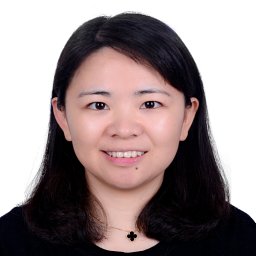
Prof. Jingxia Lin
Affiliation: Nanyang Technological University, Singapore
Beyond Standard Mandarin: Singapore Mandarin, Language Variation, and Asian Language Processing
Abstract: Standard Mandarin provides an important reference point for linguistic description and language technology, but it does not capture the full range of Mandarin as it is actually used. Across different communities, Mandarin exhibits systematic regional variation shaped by language contact, local communicative practices, and diverse sociolinguistic environments. Singapore Mandarin provides a particularly revealing case: while sharing a common linguistic core with other varieties of Mandarin, it also exhibits distinctive lexical, grammatical, and pragmatic patterns that have developed within a highly multilingual environment. This talk uses Singapore Mandarin as a case study to examine how regional variation can be identified, described, and modeled through corpus-based research and cross-variety comparison. The discussion considers how such variation is manifested across different dimensions of language use and explores its implications for natural language processing and large language models. Current models may generate grammatically well-formed Mandarin while still struggling to recognize, interpret, or produce linguistic forms that are appropriate for particular communities and communicative contexts. More broadly, the talk argues that Asian language processing needs to account not only for what is linguistically possible, but also for what is preferred, appropriate, and meaningful in actual language use.
Biography: Lin Jingxia received her PhD from Stanford University and is currently Associate Vice Provost and Associate Professor at Nanyang Technological University, Singapore. Her research focuses on variation in Chinese, linguistic typology, Singapore Mandarin, and World Chineses, with particular interests in the use, variation, and development of Mandarin in multilingual societies. She has led multiple research projects on Singapore Mandarin, using corpus development and corpus-based analysis to document and investigate the variety. Her research has appeared in leading journals including Linguistics, Cognitive Linguistics, and Corpus Linguistics and Linguistic Theory. She is also a co-author of a monograph on Singapore Mandarin published by Cambridge University Press.