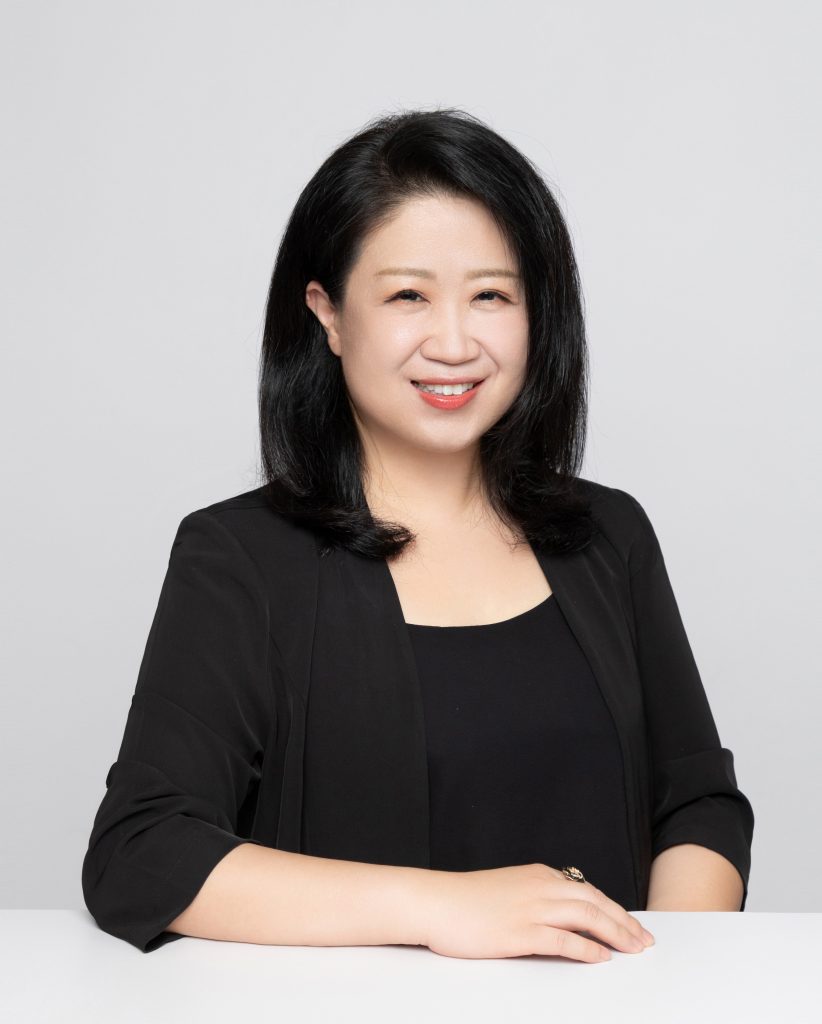
Keynote 1:Classification of the Negative Category in Chinese
Speaker:Xu Jie, Professor, Faculty of Humanities, Department of Chinese Language and Literature, University of Macau
Abstract:It was argued that negation and interrogation are non-linear grammatical categories, encompassing the entire sentence as their scope. They do not have separate centers but coincide with the sentence’s focus. Negation can be divided into three types: sentence negation, phrase negation, and word-formation negation, operating at different levels. The distinction between these types helps explain various linguistic phenomena and address previous challenges. Negation is a functional category with its scope in the attached sentence, and its center aligns with the sentence’s focus, making it inseparable. This conclusion applies only to sentence negation and not phrase or word-formation negation, and it has significant implications for resolving syntactic-semantic issues related to negation.
Biography:Prof Jie Xu obtained his bachelor’s degree from Henan University in 1981, his master’s degree from Central China Normal University in 1984, another master’s degree from the University of Hawaii in 1988, and his Ph.D. from the University of Maryland in 1993. He has taught at Central China Normal University, the National University of Singapore, and Henan University. He is currently the Dean of the Faculty of Humanities at the University of Macau, the Director of the Linguistics Research Center, a Distinguished Professor in the Department of Chinese Language and Literature, and a part-time Chair Professor of the Yangtze River Scholars at the School of Literature of Wuhan University. He is the editor-in-chief of the “Macau Linguistics Journal” and the deputy editor-in-chief of the English journal “Journal of Chinese Linguistics”. His main research areas include syntax, semantics, Chinese-English comparison, language acquisition, language education, language special zones, and language planning. He has published more than seventy papers, published several monographs, and edited a variety of academic collections and textbooks.

Keynote 2:Large Language Models Empowering Chinese Semantic Research
Speaker:Dong Minghui, Senior Scientist, Agency for Science, Technology and Research (A*STAR), Singapore
Abstract:The emergence of large language models, especially ChatGPT, has brought revolutionary changes to the development of artificial intelligence. This talk will explore the potential applications of large language models in Chinese semantic research. A large language model serves as an assistive tool for various tasks. It aids in knowledge acquisition, acting as a supportive tool that can help users understand complex concepts and information. It also functions as an auxiliary tool for reading articles, helping to interpret and summarize content for easier comprehension. In the context of research work, it proves to be an invaluable resource, assisting in data analysis, information extraction, and hypothesis generation. Furthermore, it is a helpful tool for article writing, providing suggestions, correcting grammar, and enhancing the overall quality of the text.
Biography: Dr. Dong Minghui studied at the University of Science and Technology of China and Peking University and received his Ph.D. in Computer Science from the National University of Singapore. He is currently a Senior Scientist at the Agency for Science, Technology and Research (A*STAR) in Singapore. He also serves as the Chairman of the Singapore Pattern Recognition and Machine Intelligence Association, Vice Chairman of the Chinese and Oriental Languages Information Processing Society, Director of the Asian Natural Language Processing Federation, and Editor-in-Chief of the “International Journal of Asian Language Processing”. Dr. Dong has also held various positions at numerous conferences including IJCNLP, ACL, InterSpeech, PACLIC, ISCSLP, IALP, CLSW, ICCPOL, COLING, and APSIPA. His main research areas include intelligent spoken language processing and natural language understanding.
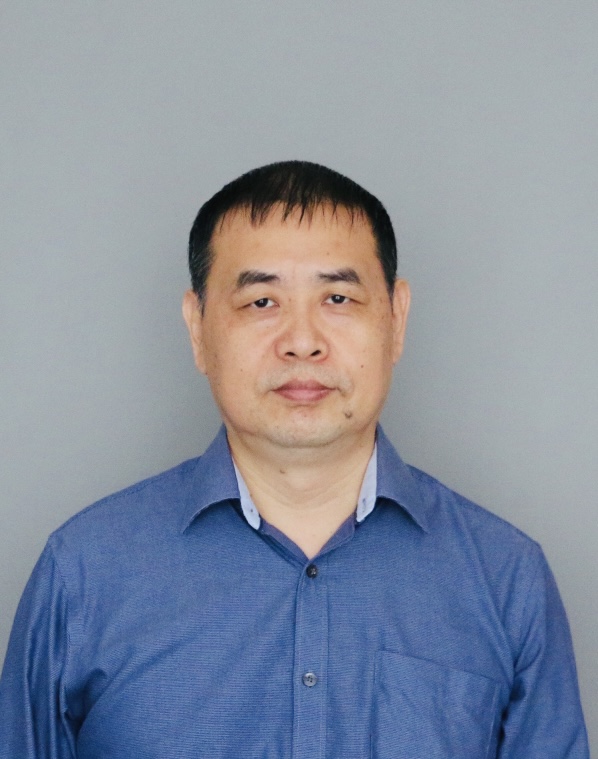
Keynote 3:Data-Driven Cultural and Cultural History Research
Speaker: Su Qi, Researcher, Co-director of the Digital Humanities Research Center, School of Foreign Languages, Peking University
Abstract: Culture is the historical sediment of society, primarily embodied in a vast amount of historical documents and cultural relics. Chinese culture, with its long and rich history, has accumulated a plethora of ancient literature. By developing intelligent processing technology for ancient books, we can automatically organize these texts and mine the intertextual relationships of thought themes and linguistic concepts at different historical stages from the literature. This allows us to trace the dissemination, evolution, inheritance, and development of the ideas of our predecessors. At the same time, by using computer vision technology to identify and extract key information from cultural relics, we can gain a multi-dimensional understanding of cultural development.
Biography: Su Qi is a researcher at the School of Foreign Languages and the Artificial Intelligence Research Institute at Peking University (dual appointment), a doctoral supervisor, and the deputy director of the Digital Humanities Research Center at Peking University. Her main research areas include natural language processing, corpus linguistics, and digital humanities. She has led research projects funded by the National Natural Science Foundation, Beijing Social Science Foundation, sub-projects of the National Key R&D Program, and sub-projects of the National Social Science Key Project. She has received awards such as the Wang Xuan Young Scholar Award from Peking University, the Huang Tingfang/Xinhe Outstanding Young Scholar Award, and the First Prize for Scientific and Technological Progress from the Chinese Institute of Electronics.
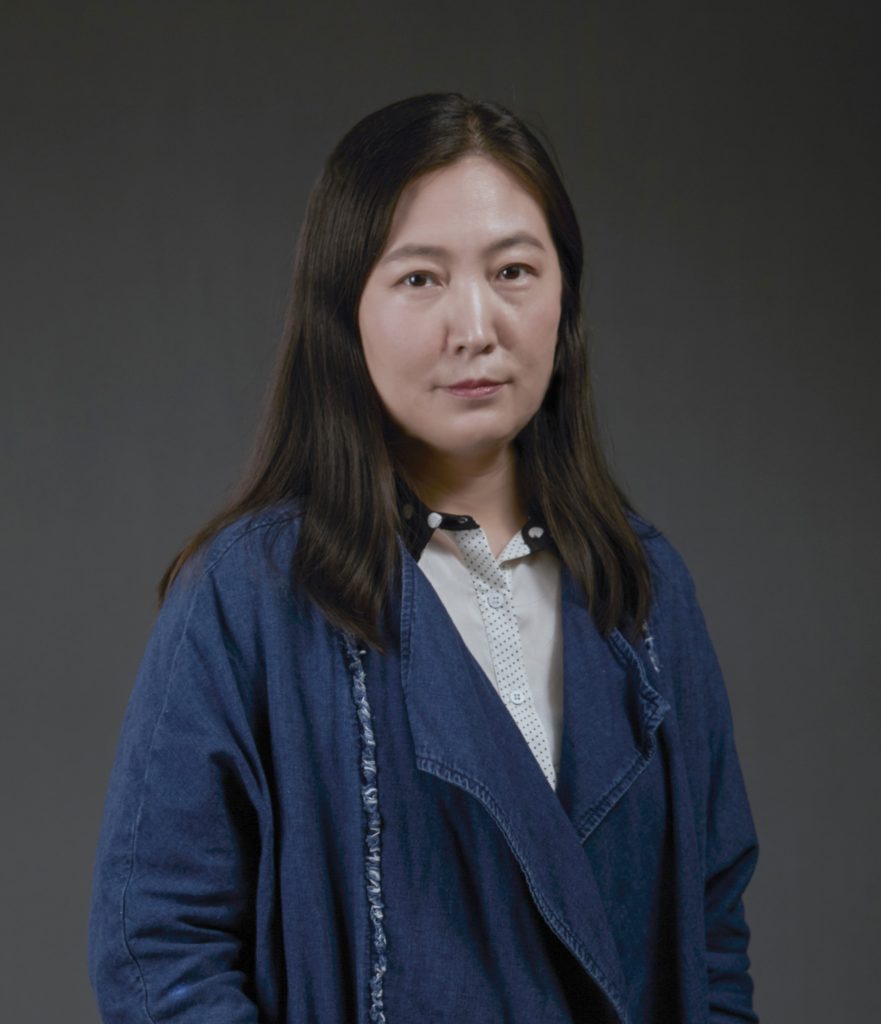
Keynote 4:Research on Vocabulary Semantics in the Unified Chinese Language Textbooks for Basic Education in China
Speaker: Du Jingjing, Professor, Xiamen University Tan Kah Kee College
Abstract: China has implemented a unified system for Chinese language teaching materials since 2017. However, there has been a lack of comprehensive investigation into language aspects, particularly vocabulary. Standardization and foundational aspects of these materials are crucial for authoritative language education. This study examines the quantity, levels, and categories of vocabulary to enhance teaching quality and efficiency. Vocabulary plays a vital role in Chinese language education, shaping the language’s semantic system. The teaching materials encompass four major systems with three types of vocabulary. A “Common Vocabulary List for Compulsory Education (Draft)” was published in 2019, serving as China’s first list with word category annotations. The study compares the vocabulary in the teaching materials with this list to explore its coverage and characteristics, providing insights for Chinese language education reform and textbook development.
Biography: Du Jingjing is a professor at Jia Geng College, Xiamen University. She also holds the position of Deputy Director at the National Language Resource Monitoring and Research Education Textbook Center and the Cross-Strait Language Application and Narrative Culture Research Center. With a Ph.D. in Chinese Language and Writing from Xiamen University, she is recognized as a reserve talent of the National Language Committee and serves as a member of the National Language and Writing Standardization Technical Committee in Fujian Province. Du Jingjing’s research focuses on language planning, policy, Taiwanese language life, language teaching materials, language proficiency, and lexicology. She has led numerous research projects, published multiple academic papers, and authored one monograph while contributing to eight academic works and textbooks.